

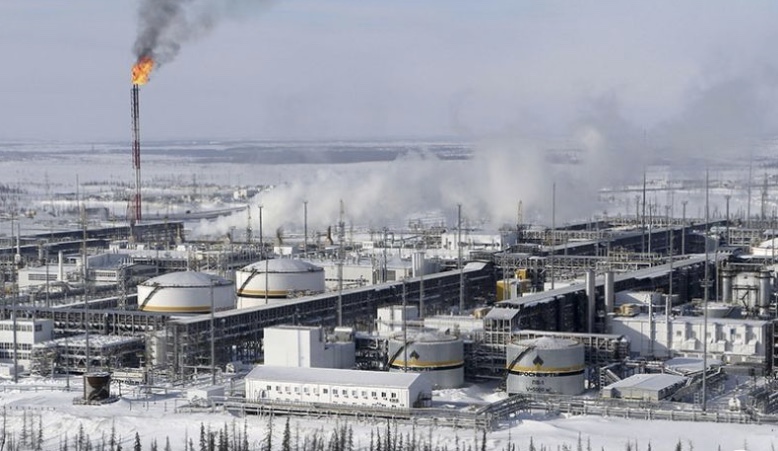
London, The Indonesia Post – Oil prices extended gains on Thursday, amid supply concerns after the European Union drew up plans for new sanctions against Russia, including a six-month crude oil embargo, offsetting concerns over weaker Chinese demand.
Brent crude futures were up 36 cents, or 0.3 percent, to trade at 110.50 dollars a barrel at 08.25 GMT. U.S. West Texas Intermediate (WTI) crude futures rose 11 cents, or 0.1 percent, to trade at 107.92 dollars a barrel.
Both benchmark prices strengthened more than five US dollars per barrel on Wednesday (4/5/2022).
The proposed sanctions, which require unanimous support by the 27 EU countries, also include a halt to imports of Russian refined products by the end of 2022, and a ban on all shipping and insurance services for the transport of Russian oil.
“The oil market has not fully considered the potential EU oil embargo, so higher crude prices are expected in the summer months if it is voted into law,” said Rystad Energy’s head of oil market research, Bjørnar Tonhaugen.
French Environment and Energy Minister Barbara Pompili said she was confident EU member states would reach a consensus on sanctions by the end of this week.
“The planned EU oil embargo represents a massive logistical challenge for the oil market,” said Investec’s Head of Commodities Callum Macpherson.
“Crossing Russian production from Europe to willing buyers in Asia, given the sanctions, is already very challenging and even Russia has acknowledged its production will decline significantly,” he added.
Meanwhile in its meeting on Thursday, the Organization of the Petroleum Exporting Countries and allied producers, known as OPEC+, are likely to stick to a moderate increase in oil output citing geopolitical irresponsibility and supply disruptions.
OPEC Secretary General Mohammad Barkindo insisted it would be impossible for other producers to replace Russian supplies, but expressed concern about slowing demand for transportation fuels and petrochemicals at the world’s top importer, China, due to the prolonged COVID-19 lockdown.
A private sector survey on Thursday showed China’s service sector activity contracted at the second deepest rate recorded in April under the effects of pandemic measures.
In Iran, soaring oil prices have let its energy-dependent economy breathe a sigh of relief and so its rulers are in no rush to revive a 2015 nuclear pact with world powers to ease sanctions, three officials familiar with Tehran’s thinking said.
In the United States, crude stockpiles rose 1.2 million barrels last week after more oil was released from strategic reserves, according to the US Energy Information Administration. (mhn/bbs)




Comment