

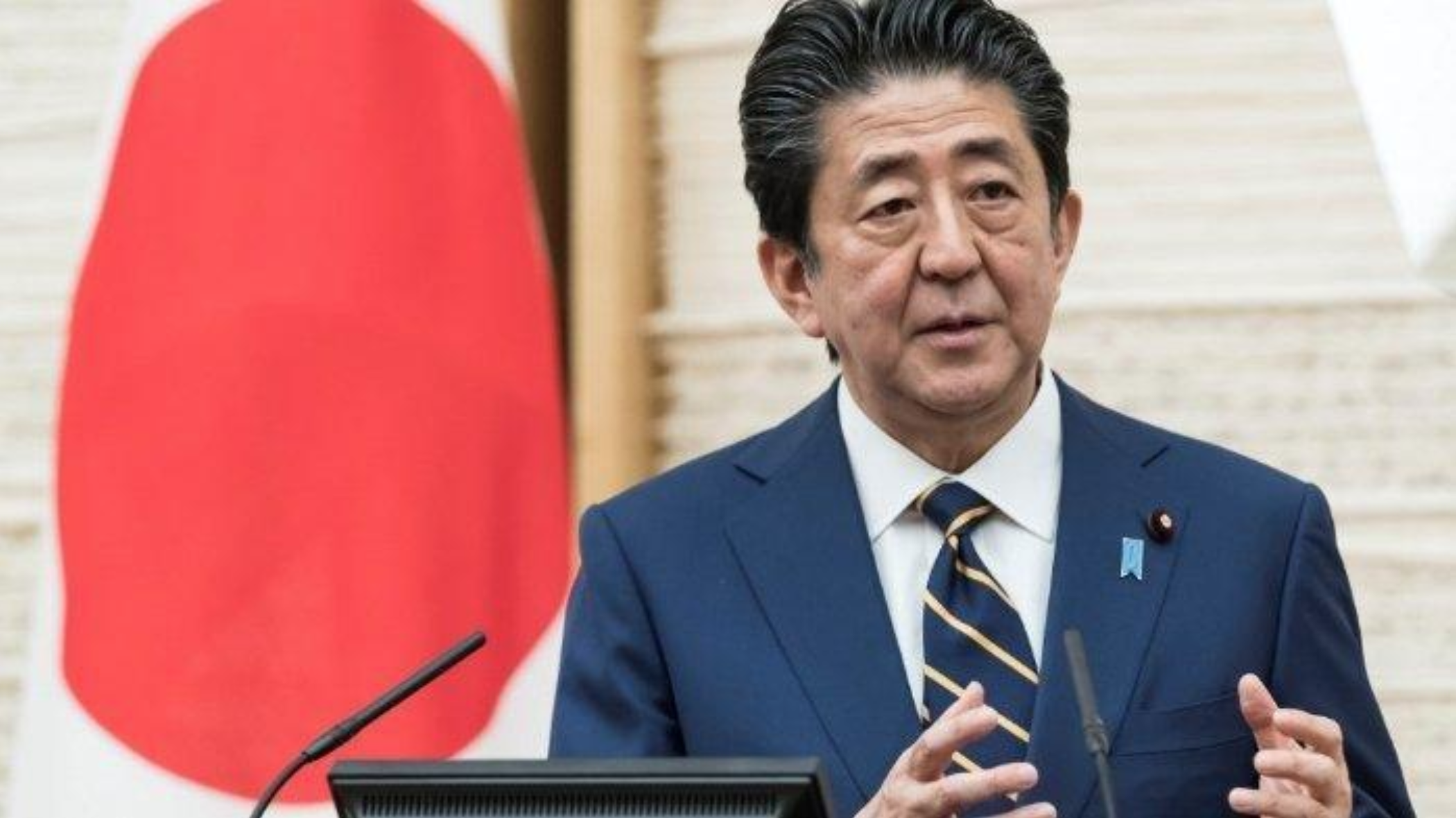
Tokyo, The Indonesia Post – The Japanese Prime Minister, Shinzo Abe officially resigned. The announcement of his resignation was broadcast live on television in Japan. Some of residents stopped their activities for a moment and chose to watch Abe’s announcement from videotrons on the streets. Among them are residents in Shinjuku, Tokyo.
Abe is indeed famous in Japan. He is in the hearts of his people. He is Japan’s longest serving prime minister since being inaugurated in 2012. In fact, he has also been elected as prime minister before. But resigned in 2007. Then was elected again. And has served again since 2012 until now resigned.
When resigning in 2007, the cause was ulcerative colitis in his digestive system. Which has been problematic since he was a teenager. And at the age of 65 years now, the disease has returned to attack. Japanese media said Abe had visited the hospital twice in the past week. In fact, on one visit to the hospital it took up to eight hours. If he had not resigned, Abe would have served until September 2021.
“Although there is still one more year in my term and there are challenges to face, I have decided to step down as prime minister,” said Abe as quoted from CNN.
Abe is known as a conservative and nationalist. During his tenure he was known for his flagship “style”, “Abenomics”.
One of his successful economic policies was when he made a deal with the Bank of Japan (BoJ). The aim is to implement monetary easing policies to reduce borrowing costs, stimulate business activity and personal consumption, drive inflation by up to two percent to end the deflation that has plagued the Japanese economy since the 1990s.
The BoJ’s policies helped strengthen the competitiveness of Japanese exporters by weakening the yen. The Japanese economy is gradually recovering and prices are slowly increasing. Unfortunately, the inflation target remains out of reach. The economic performance is still far from expectations.
Abe is also spending hundreds of billions of dollars on modernizing infrastructure across the country, some of it for the 2020 Tokyo Olympics.
Apart from these two strategies, another strategy in ‘Abenomics’ is structural reform. Its main target is the Japanese labor market. This strategy was quite successful even though Japan finally entered the brink of recession. Even before the Covid-19 pandemic.
Then what about the fate of the Japanese economy after the ‘death of Abenomics’?
Under Japanese law, Abe’s possition can temporarily replace by an acting prime minister. And the acting prime minister can act without time limitation.
The Liberal Democratic Party (LDP), which is currently in power has a big influence in replacing the prime minister. However, currently there are already a number of names that are being predicted to replace Abe.
Among them is Deputy Prime Minister Taro Aso, who is also finance minister. This name is the top among the other candidates for successor. Followed by Chief Cabinet Secretary Yoshihide Suga. Then there is the name Shigeru Ishiba. He is the former Minister of Defense of Japan and someone who is quite critical of the LDP. Next up is the name Fumio Kishida. He has served as Minister of Foreign Affairs of Japan during Abe’s leadership. Next there is the name Koizumi Shinjiro. Then Yoshihide Suga, the last independent politician, was Taro Kono. He is the Minister of Defense of Japan who is currently 56 years old. He had a reputation for being a maverick – a term for people with unusual points of view.
Whoever replaces Abe in the future is, of course, the best for Japan. At the same time, we hope that Abe’s replacement will have a foreign policy that will not harm other countries, including Indonesia. Moreover, to have the desire to start a war like in the past. (ojn/bbs)




Comment