

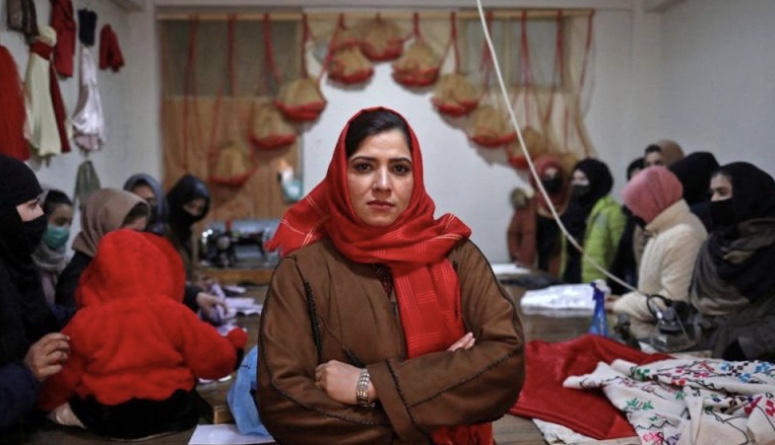
Kaliban, The Indonesia Post – At a small garment shop in Kabul, Afghanistan, businesswoman Sohaila Noori (29) supervises 30 of her workers who are sewing headscarves, dresses and baby clothes.
A few months ago, before the Taliban took power in August, he employed 80 people, mostly women, in three different businesses.
“Back then, we had a lot of work,” says Noori, determined to keep her business afloat in order to employ as many women as possible.
“We received several contracts, could pay salaries easily to experienced tailors and other workers, but now we don’t have a contract.”
When the Afghan economy plunges into crisis – billions of dollars in aid and reserves are cut off and people struggle to meet basic needs – entrepreneurs like Noori struggle to keep their businesses alive.
The situation is exacerbated by the Taliban government’s policy of allowing women to work only in certain fields. As a result, many women have to quit their jobs for fear of being punished.
Women’s rights in the country, which were fought for over the past two decades, are fading fast.
Reports from human rights defenders and international labor organizations this week describe the poor condition of women in finding jobs and accessing public spaces.
While the economic crisis has hit the whole country – some agencies predict that almost the entire population will fall into poverty in the coming months – the impact has been felt disproportionately by women.
“The crisis in Afghanistan has created a difficult situation for women workers, even worse,” said Ramin Behzad, Senior Coordinator at the International Labor Organization (ILO) for Afghanistan.
“Jobs in key sectors have been lost, while newly imposed restrictions on women’s participation have also had an impact on households.”
The female labor force participation rate in Afghanistan fell by about 16 percent in the third quarter of 2021, according to an ILO report released on Wednesday, while the number of male workers fell 6 percent.
That figure by mid-2021 is expected to be 21 percent lower than before the Taliban came to power if current conditions do not change, according to the ILO.
For workers at Noori’s establishments, the opportunity to earn an income has trumped worries.
“Most of the family members are worried for our safety. They often call when we are late coming home, but we all continue to work… because we have economic problems,” said Lailuma, who is afraid to give her full name.
Another worker, Saleha, is now the breadwinner for her family.
“My salary is around 1,000 Afghanis (Rp 143,400) per month, and I’m the only breadwinner in the family… Unfortunately, since the Taliban came to power, there has been no income at all.” (ojn/bbs)




Comment