

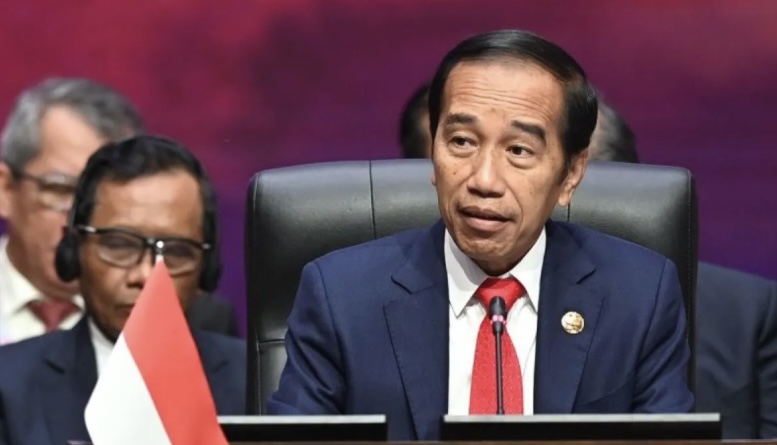
Jakarta, The Indonesia Post – Association of Southeast Asian Nations (ASEAN) leaders affirmed their support for Myanmar’s commitment to facilitate the voluntary repatriation of Rohingya refugees in a safe, secure and dignified manner.
“We note the involvement and cooperation between Myanmar and Bangladesh in the repatriation pilot project, to facilitate the return of more than 7,000 refugees by the end of 2023 and welcome Myanmar’s efforts to work toward the implementation of this project,” the ASEAN leaders said in a statement released after the summit. the 43rd ASEAN event in Jakarta, Thursday.
ASEAN wants to continue its contribution to the repatriation process through the implementation of projects, as a follow-up to the Initial Needs Assessment (PNA) recommendations carried out by the AHA Centre.
“We also look forward to a Comprehensive Needs Assessment (CNA) when conditions permit and encourage the ASEAN Secretary-General to continue to identify possible areas for ASEAN to facilitate the repatriation process effectively,” said the ASEAN leaders.
Instead, the United Nations (UN) has urged Bangladesh to end its pilot repatriation project for Rohingyas to return to Myanmar, where they face serious risks to their lives and freedom.
UN Special Rapporteur on the situation of human rights in Myanmar Tom Andrews said there were reports that Bangladeshi authorities were using deceptive measures to force Rohingya refugees to return to Myanmar.
“Conditions in Myanmar are absolutely not conducive to the safe, dignified, sustainable and voluntary return of Rohingya refugees,” Andrews said in a statement last June.
“Senior General Min Aung Hlaing, who led forces that launched genocidal attacks against the Rohingya, now leads a brutal military junta that attacks the civilian population while denying the Rohingya citizenship and other basic rights,” he said, adding.
Bangladeshi officials have stated that an initial group of 1,140 Rohingya refugees will be repatriated to Myanmar at an unspecified date and another 6,000 people will be repatriated by the end of this year.
Bangladeshi authorities reportedly threatened arrests, confiscation of documents and other forms of retaliation for those who reject the government’s plans.
“There have also been reports of refugees being promised large sums of money if they agree to return. These promises were allegedly made even as food rations were cut to $0.27 per person per day for those in Bangladesh camps. It remains unclear where the funds for the repatriated families will come from,” Andrews said.
Under this pilot project, Rohingya refugees will not be allowed to return to their own villages, many of which were razed to the ground during the genocidal attacks in 2017.
The refugees will pass through a “reception” and “transit” center in the Maungdaw area, after which they will be moved to a designated area of 15 newly built “villages”, a place they are not allowed to leave freely.
In March, Bangladeshi authorities facilitated two visits by Myanmar junta authorities (SAC) to Bangladeshi camps.
Bangladeshi officials said the refugees had expressed “general satisfaction” with the arrangements made for their repatriation, but these assurances contradicted reports that those participating in the trip had categorically rejected repatriation plans.
“The return of Rohingya refugees under these conditions would likely breach Bangladesh’s obligations under international law and expose the Rohingya to serious human rights violations and, most likely, atrocity crimes in the future,” Andrews said. (mhn/bbs)


Comment