

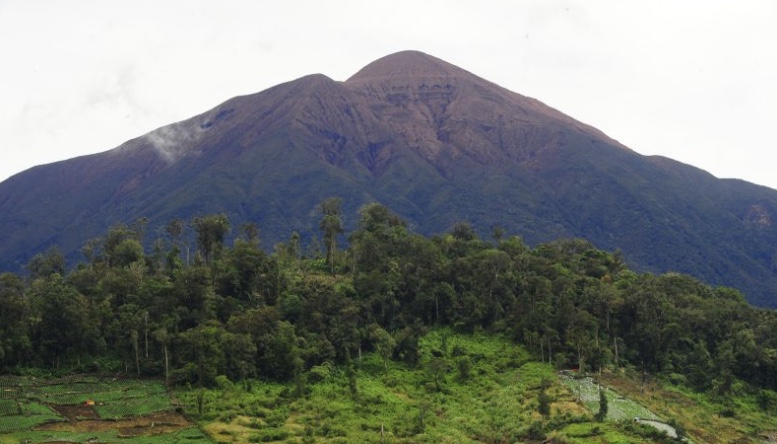
Jakarta, The Indonesia Post – The Geological Agency of the Ministry of Energy and Mineral Resources noted that the number of volcanic activity in Indonesia has occurred more than 150 eruptions in the last two decades.
Head of the Center for Research and Development of Geological Disaster Technology (BPPTKG) Hanik Humaida said the level of volcanic activity in Indonesia is quite high with different characters and different types of eruptions.
“Volcanic activity for the 2000-2021 period saw more than 150 eruptions from 38 volcanoes with various types of eruptions, namely effusive, explosive, and phreatic, and caused various dangerous phenomena,” he said in a statement quoted in Jakarta, Friday.
Hanik explained that it is necessary to identify volcanic activity and understand the dangers and risks as materials for volcanic mitigation.
According to him, the identification of hazards and risks is by observing the type of volcanic eruption and the period of repeated eruptions.
“Identification of eruption phenomena is also necessary, such as eruptive hot clouds, hot avalanche clouds, gas, ash fall, lahars, lava flows, and tsunamis, as well as the impact of the hazard range,” said Hanif.
If the activities and hazards of volcanic disasters have been identified, then disaster mitigation efforts can be carried out.
Hanif explained that disaster mitigation cannot be carried out by one agency alone, but needs to be carried out jointly by all relevant stakeholders.
“Volcano disaster mitigation includes early warning, information dissemination, education, and socialization,” he explained.
Deputy for Prevention of the National Disaster Management Agency (BNPB) Afrial Rosa revealed that all stakeholders have the same role in mitigating volcanic disasters, one of which is the dissemination of information related to volcanic disaster mitigation to the public.
He assessed that there are things that need to be improved between all relevant stakeholders so that the dissemination of information can be well received and understood by the community.
“There needs to be a clear coordination flow in this disaster mitigation system, so that early warning of disaster conditions can be ensured to the community,” concluded Afrial. (mhn/bbs)




Comment