

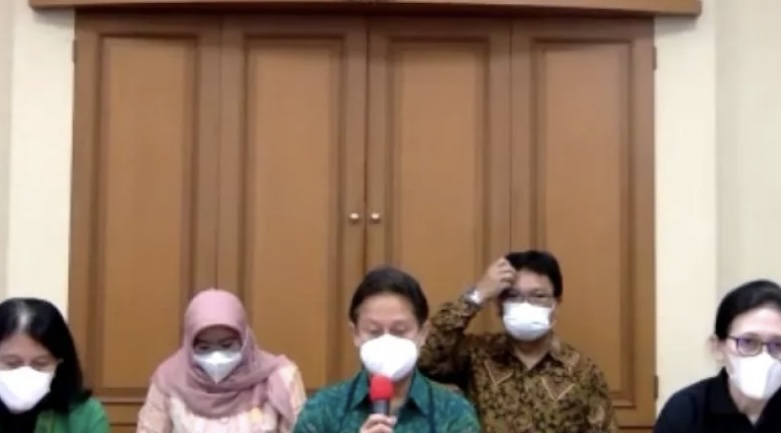
Jakarta, The Indonesia Post – The Minister of Health of the Republic of Indonesia Budi Gunadi Sadikin confirmed that cases of atypical progressive acute kidney disease (AKI) in patients in Indonesia could be cured after the government obtained drugs that were relevant to the cause of the disease.
“Once we found out what the cause was, what the toxicity was, we looked for the medicine for the toddlers who were admitted to the hospital. We have found the medicine, it’s called Fomepizole (injection),” said Budi Gunadi Sadikin at an AKI press conference which was followed online in Jakarta, Friday.
According to Budi, the drug is not yet available in Indonesia, so it is still imported from the manufacturer in Singapore.
The drug was then tried on 10 AKI patients who were being treated at the RSCM. The Fomepizole reaction triggered an improvement in the patient’s symptoms, and some others were stable, Budi added.
“So we feel more confident that this drug is effective. Now the Indonesian government is bringing in more patients now, because we already know what the cause is, it can be treated,” he said.
Budi hopes that the presence of the drug Fomepizole, which has been tested for the last three days at the RSCM, can reduce the death rate of AKI patients, which has now reached 133 people out of a total of 241 patients being treated in 22 provinces.
“So in addition to preventing the source of the disease, we also do therapy in terms of drugs,” he said.
Budi said that AKI, which originally had a status as a mysterious disease, had been successfully revealed by the government based on the results of an investigation into the pathogens contaminating the syrup drugs, namely Ethylene glycol, Diethylene Glycol (DEG) and ethylene glycol butyl ether (EGBE).
Based on the results of pathogen research on PCR and metagenomic examinations, Budi said, it was known that AKI was triggered by these chemical compounds.
“If the chemical compound enters human metabolism, it changes the chemical compound into oxalic acid. This is dangerous, if oxalic acid enters the kidneys, calcium oxalate can be like small sharp crystals that damage children’s kidneys,” he said. (mhn/bbs)




Comment