

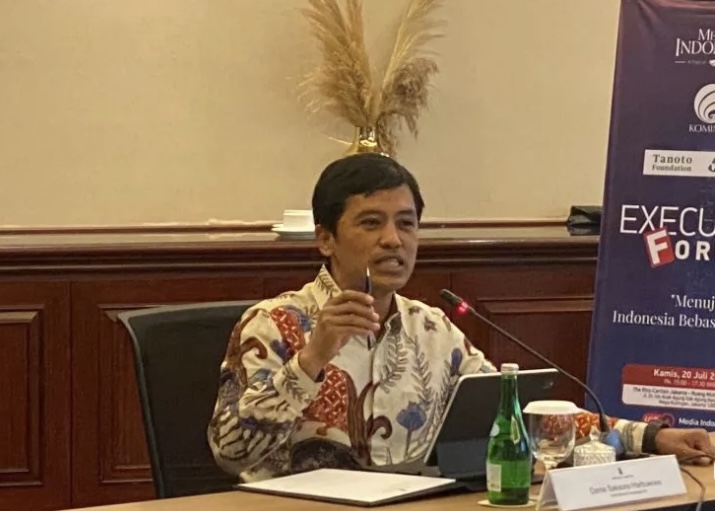
Jakarta, The Indonesia Post – Deputy Minister of Health of the Republic of Indonesia Dante Saksono Harbuwono stated that the stunting alleviation priority program was an effort by the Indonesian Government to prevent the IQ or intellectual ability of children from dropping lower.
“If we want to achieve a golden generation where Indonesia experiences high economic growth, we need competitive capital and most of that is human resources,” Dante said at the Forum Towards a Stunting-Free Indonesia in Jakarta, Thursday.
Dante said, the government’s biggest fear in dealing with stunting in children, does not lie in their growing height which is not optimal. But the child’s brain cannot be formed properly and can cause a long-term impact in the form of a decrease in the child’s intelligence.
The IQ of stunted children, on average, is 11 points lower than that of children who are not stunted. Low IQ causes children’s productivity to be lower in adulthood.
According to Dante, stunted children are estimated to have a 22 percent lower reduction in earning capacity, as a result of the child’s low intelligence, namely the emergence of uncompetitive traits.
This has the potential to make Indonesia fall behind or lose when competing with other countries. Apart from being unproductive and uncompetitive, the diseases suffered by stunted children in the next 30 or 40 years can make the country’s health burden swell.
Stunted children, he said, are at risk of having a threefold greater probability of death due to chronic diseases such as diabetes, stroke and hypertension.
“This is the result of an investment we made late some time before when he was a child. Not only on individuals, stunting has an impact on the nation’s competitiveness. This is a common problem, once again, this is a matter of national competitiveness,” said Dante.
Therefore, the government continues to try to accelerate the reduction of stunting through 11 programs, each target covering the human life cycle. For example, before birth, young women are screened for anemia and given iron tablets (TTD).
Meanwhile for pregnant women, the government has set the number of visits for mothers to check their pregnancies (ANC) at the puskesmas to six times, followed by giving iron tablets and providing additional food for pregnant women who are chronically malnourished (KEK).
Dante continued that after the baby was born and entered the toddler age phase, the government strengthened monitoring of child growth while socializing the importance of exclusive breastfeeding and provision of additional food (PMT) in the form of animal protein for under-fives.
For toddlers who are monitored to experience a growth and development problem, the government will oversee the management of toddlers affected by these nutritional problems. Dante said the government is also increasing the coverage and expanding the types of routine basic immunizations to prevent children from getting recurrent infections either from viruses or bacteria.
Meanwhile, during the pre- and postnatal period, both for young women, pregnant women, toddlers and the general public, the government has created educational programs related to the dangers of stunting which are echoed throughout Indonesia.
“(Our stunting rate) is already 21.6 percent this year. In 2023, hopefully it will go down, if for example it goes down 3.8 percent it could be 17.8 percent. Finally, we can go down to 14 percent in 2024 as the target we all hope for,” said Dante. (mhn/bbs)





Comment